

Big achievements deserve big celebrations, and summiting Mount Kilimanjaro is a pretty impressive feat to conquer. It’s a climb that demands mental strength, physical endurance, and a serious commitment to pushing past your limits. I had the privilege of sitting down with John Donnelly, our Executive Director of Sales, who recently took on this challenge and came back with powerful insights, unforgettable memories, and a renewed perspective on what it means to set your sights high.
What made you decide to take on the challenge of climbing Mount Kilimanjaro?
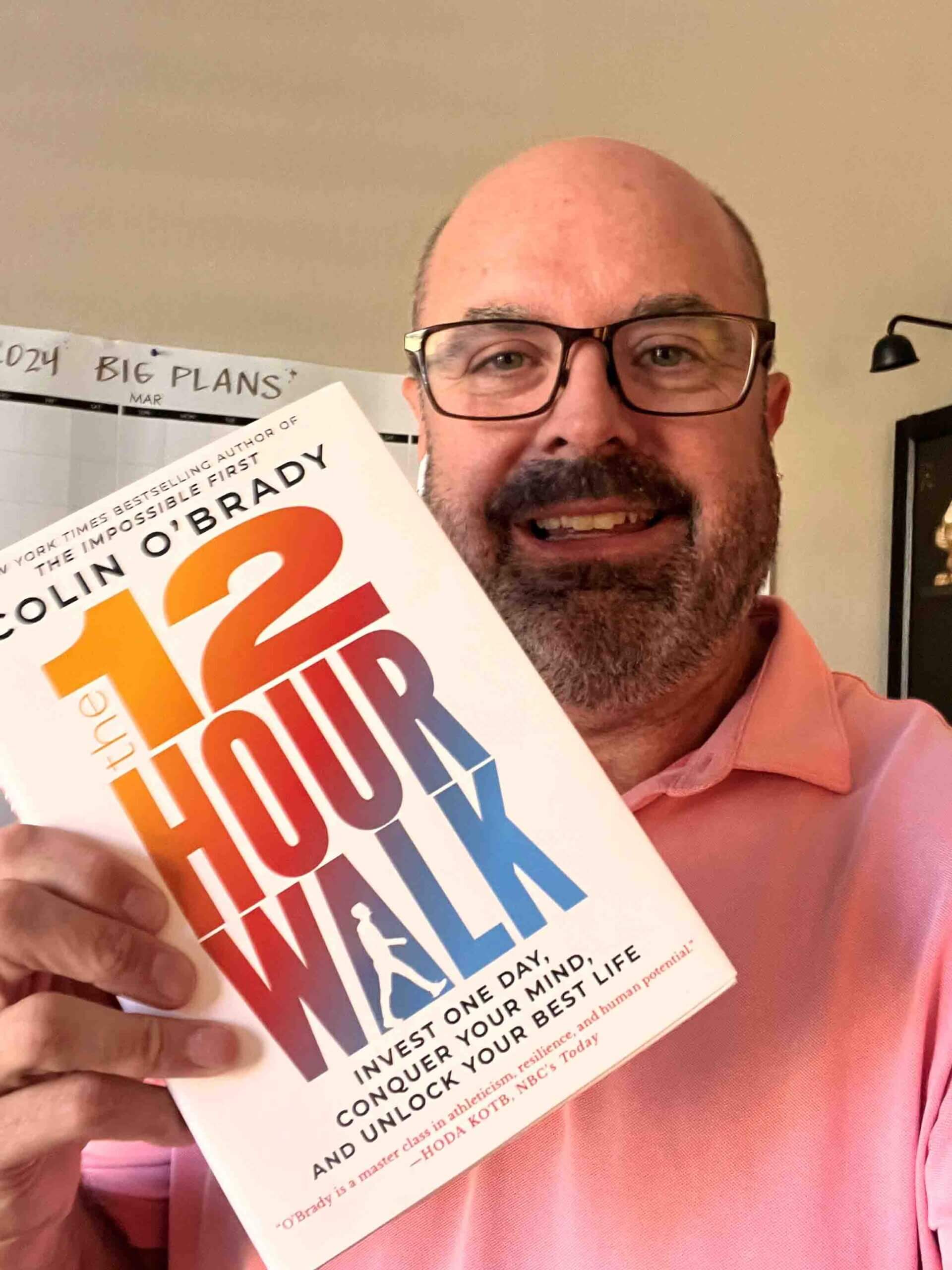
I read a book called The Twelve Hour Walk that challenges you to walk for 12 hours with no music, no podcasts, and no conversation. Just you and your thoughts. I took that challenge and filled a notebook with reflections. I was turning 50. I wasn’t in great shape. I felt like I needed to do something that would push me and prove to myself I could still do hard things. Kilimanjaro had been in the back of my mind for about a decade. During that walk, it moved to the front. I came home and committed to the climb.
How did you prepare? Was it a lengthy preparation process?
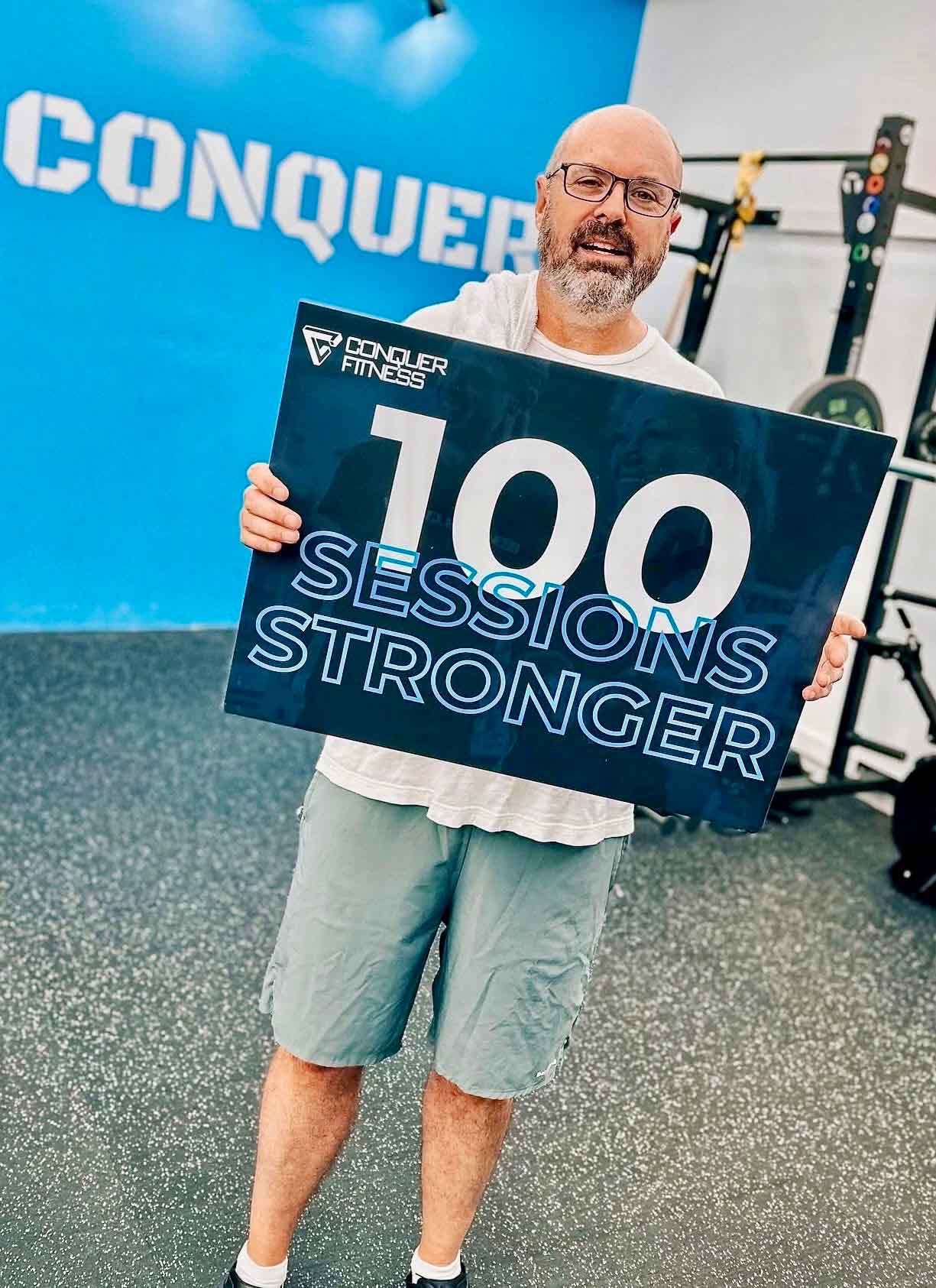
I joined a gym and focused on building strength and endurance. My workouts included lunges, step-ups, squats, and upper body work since I would be carrying a pack. I started walking regularly and built up to longer hikes with elevation. Over time, I logged 115 gym workouts and put in countless miles on foot. It was a long journey, but every bit of it mattered when I got on that mountain.
How did you stay motivated to push through the early mornings, training sessions, and see this through to completion?
It came down to having a clear vision. I made a deposit. I committed. And I told people about it. That created accountability. But the deeper motivation was the image I had in my head of reaching the summit. That picture kept me focused when I didn’t feel like going to the gym or getting out of bed early. I wasn’t just training. I was preparing for something that mattered to me. What I didn’t expect was how much I would enjoy the process. I was eating better. I was in better shape. I felt stronger, more focused, and more alive. I could feel myself becoming the kind of person I wanted to be. That change was just as motivating as the climb itself. The mountain was the goal. But who I was becoming along the way became the reward.
When you arrived in Tanzania and were standing at the base of Kilimanjaro, what were your thoughts?
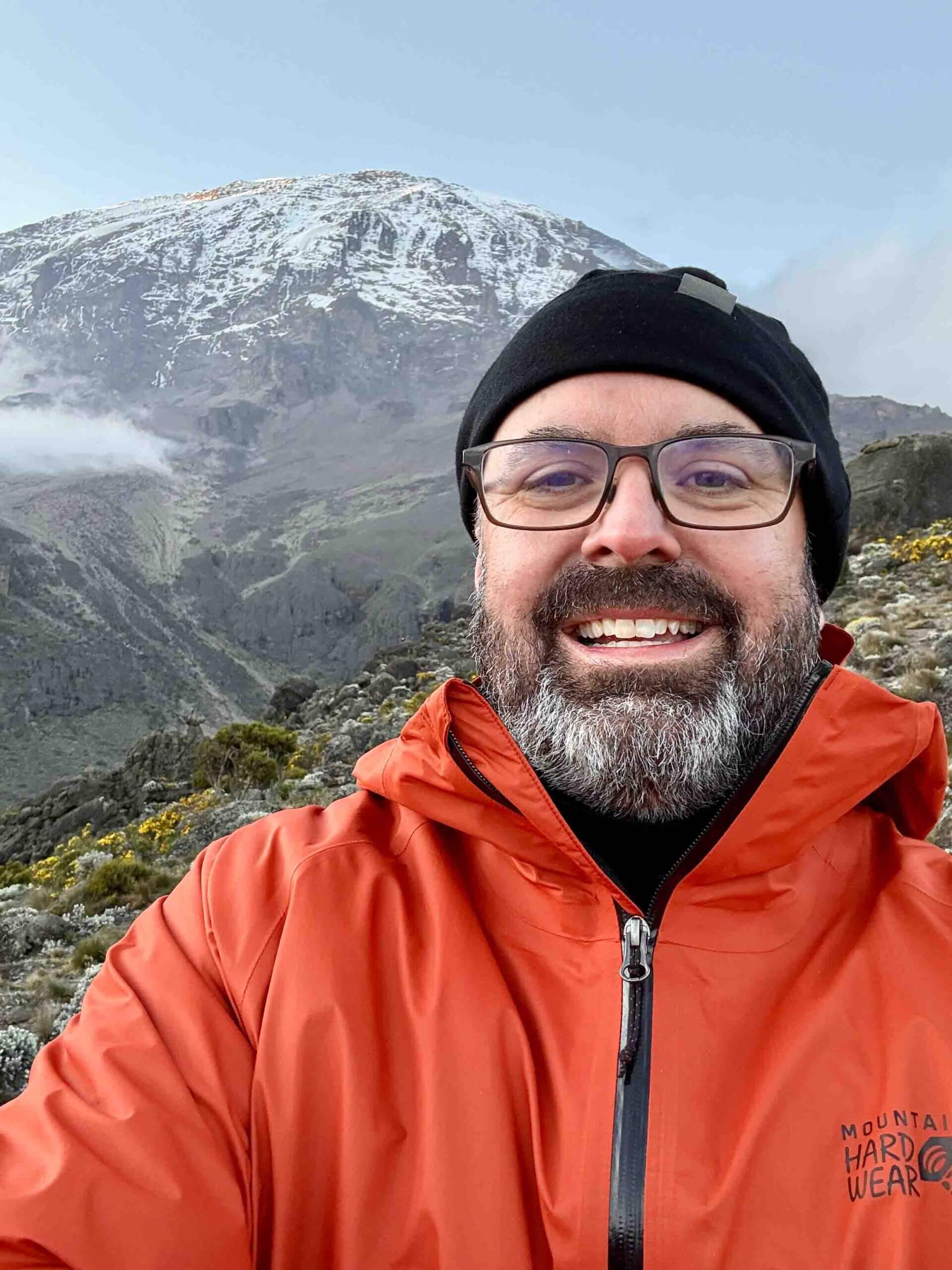
The first time I saw it was from the airplane. I looked out the window and saw it rising above the clouds. It looked massive. Later, from the ground, the clouds cleared and I saw it again. Every time I caught a glimpse, it looked taller. It was beautiful. And real. It didn’t feel overwhelming, but I had a deep respect for what I was about to take on. It was almost surreal. I was really there. After months of training and planning, this thing I had imagined was now right in front of me. I knew we had a long way to go to reach the summit, but I felt determined. I was ready for the challenge. I felt calm, focused, and grateful to even be standing there at the base of the tallest free-standing mountain in the world, knowing the journey was about to begin.
How long was your climb? What did you do to stay motivated through what were probably harsh conditions?
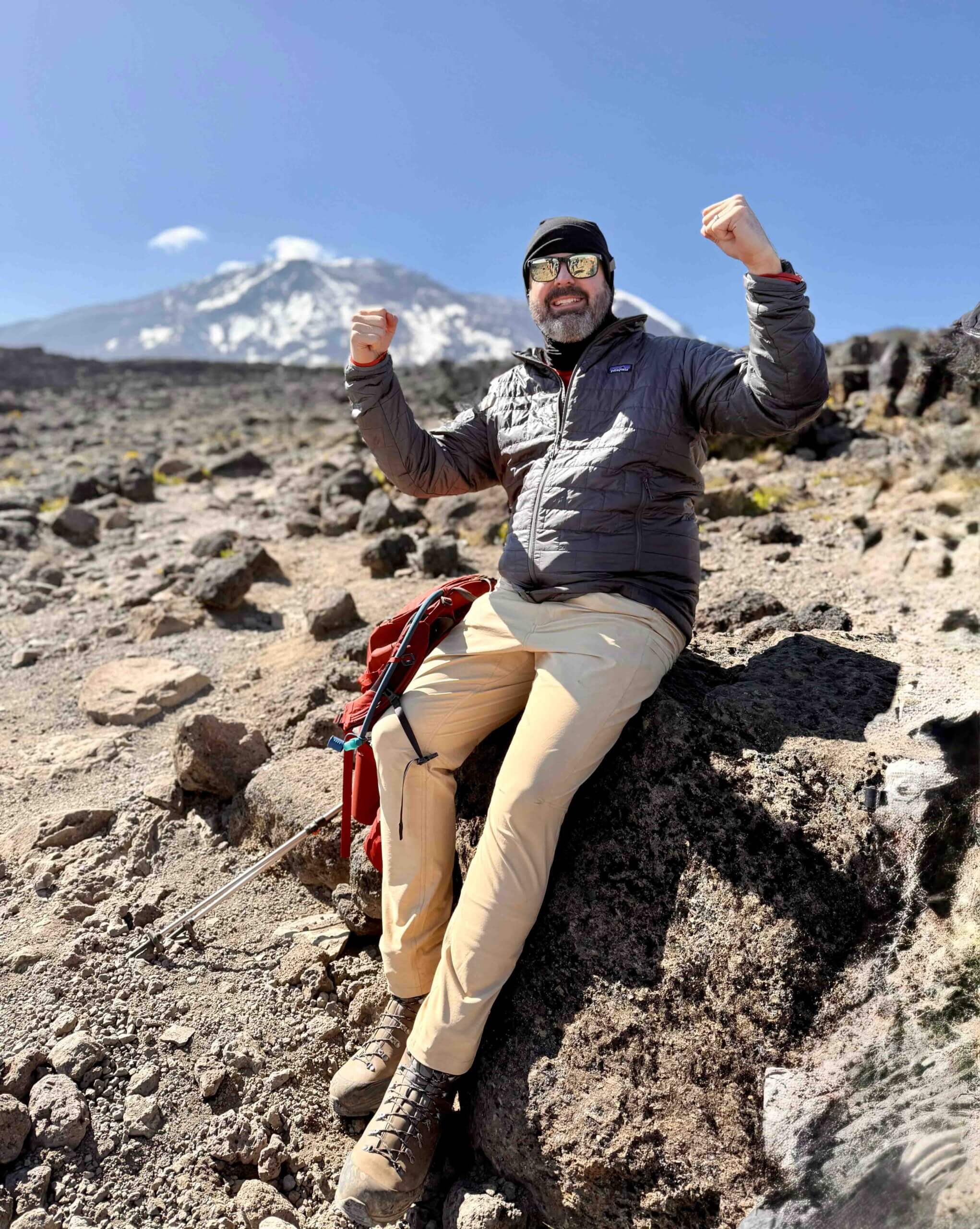
We took the Lemosho Route. It was a seven-day climb. We had good weather most of the time, but the nights were cold. Waking up in a frozen tent and heading out before sunrise took some mental strength. We had to hike high to acclimate and then drop back down to sleep. That cycle repeated a few times. The toughest stretch was summit night. We left camp at 11 PM and reached Uhuru Peak around 7:30 AM. That was the real test. Physically and mentally.
How did you feel approaching and then standing at the summit?
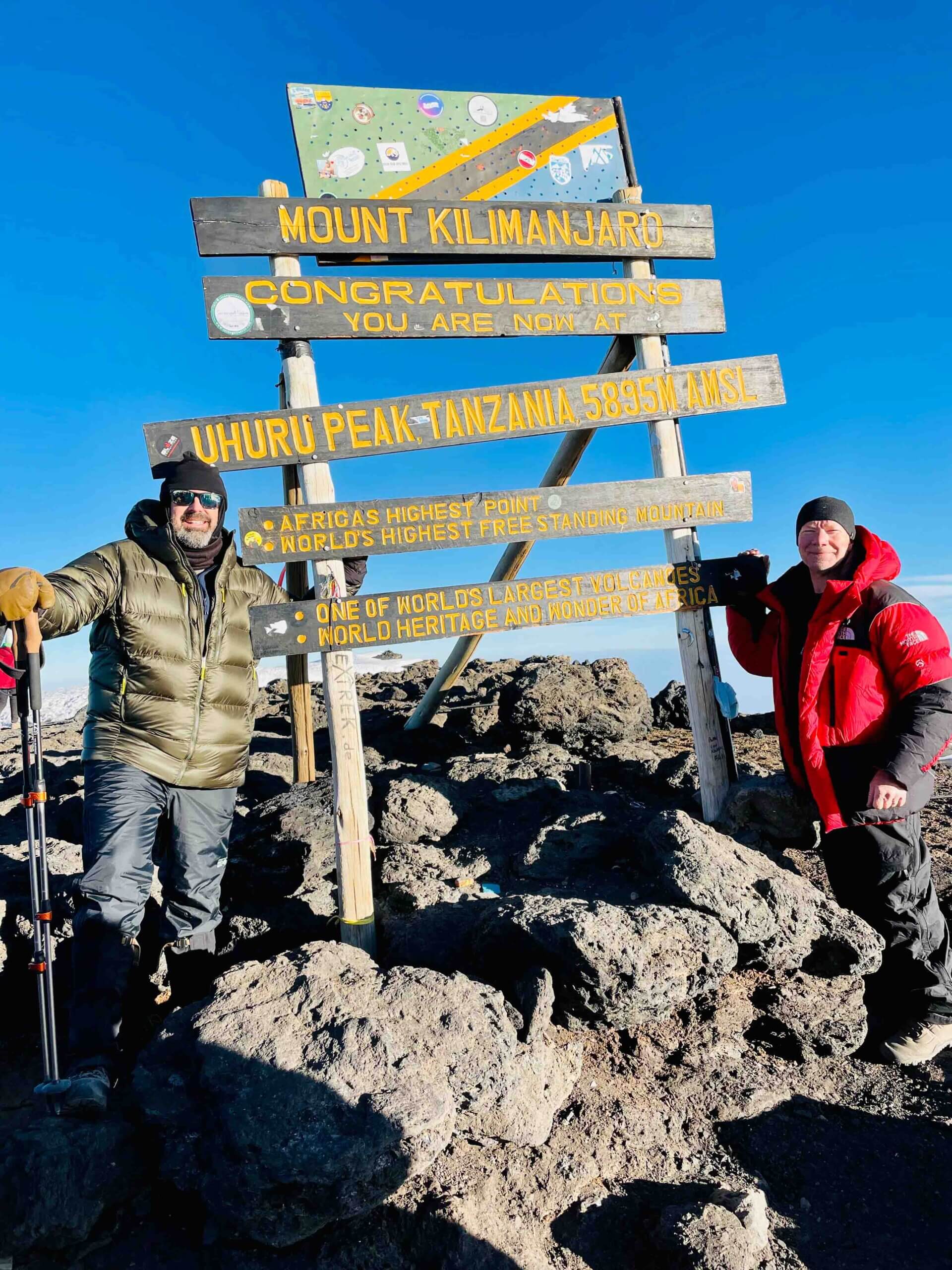
I thought I would feel this big emotional release. Instead, I felt exhausted. At that altitude, with only half the oxygen, everything is harder. We didn’t stay at the summit long. The guides wanted us to start the descent quickly. We took pictures, crossed the glacier, and stopped to rest at Stella Point. I was proud. I was grateful. And I was thankful to be standing next to my friend Mark Cabal, who joined me for the climb. Sharing that moment made it even more meaningful.
Mark Cabal and I just finish the Barranco Wall, this was one of the most fun part of the climb. It was challenging but not too technical. This was my dream. This was my goal. I had been talking to Mark about it at lunch one day, just sharing what I was planning. A few weeks later, he called and said he wanted to go. When I asked him why, he simply said, I don’t want you to do it alone. That is what true friendship looks like. He didn’t need the mountain, but he wanted to be there for me. Having him with me at the summit made the entire experience more special. I will never forget that.
How was the descent? How did you feel thinking about what you had just accomplished?
The descent was tough. You could breathe better, but the trail was steep and filled with loose gravel. Everyone in our group slipped at some point. My legs were worn out. My toes were wrecked from hitting the front of my boots. The first few hours were brutal, and then we had another long hike down to camp. It didn’t fully hit me what I had accomplished. I just felt tired. The pride came later.
Do you have a certain memory that stuck with you?
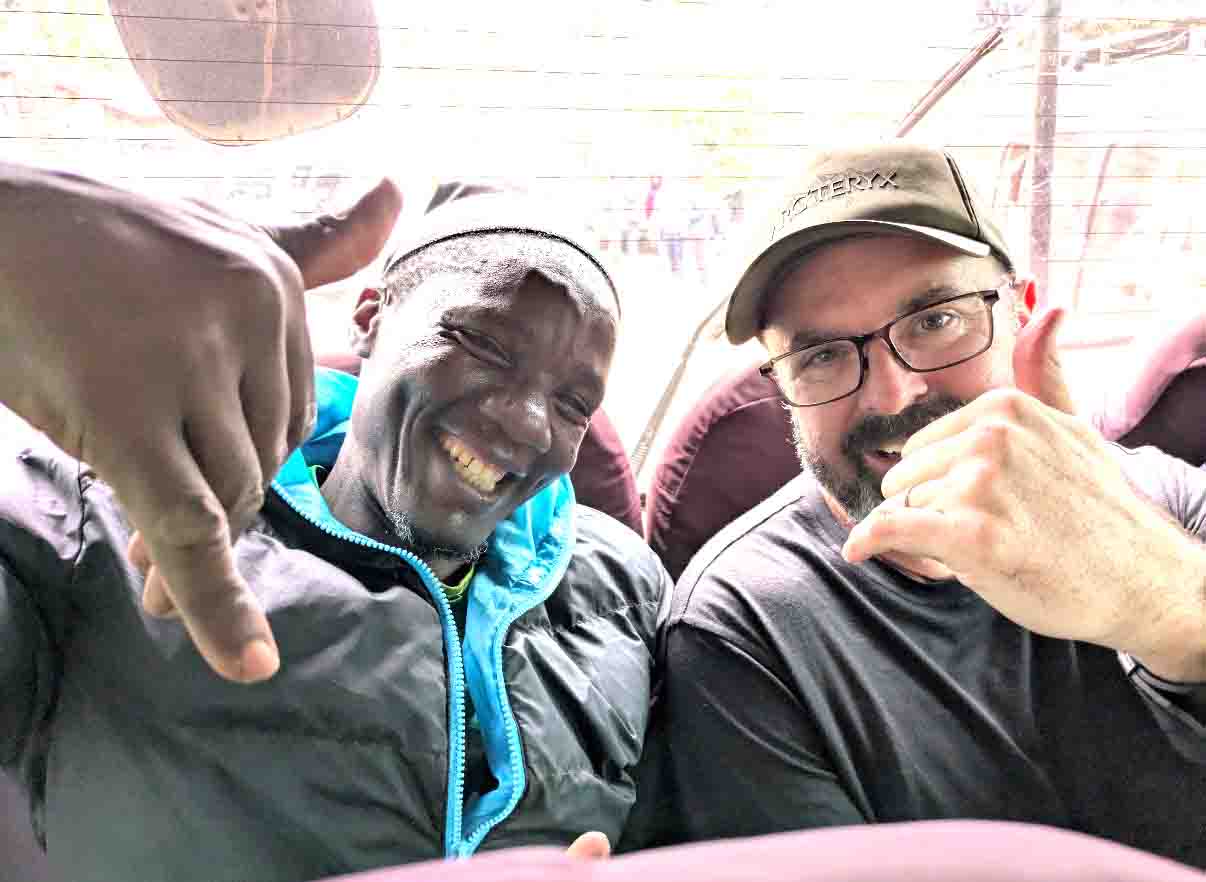
Yes. My summit porter, Aristo. I first noticed him before the climb. He was leading songs and dancing at the guide office. I asked to meet him a few days in, and we hit it off. He ended up being assigned to walk with me on summit night. He carried my gear, encouraged me, and made sure I was safe. At one point I was so tired I stopped and just stood there. He walked up and wiped my nose for me. I’ll never forget that. He called me Papa. I called him my man. I honestly don’t know if I would have made it to the top without him.
Thinking back on your journey from deciding to take this on to walking back into your home, what did you learn about yourself?
I learned that I can still do hard things. That when I say I’m going to do something, I follow through. That’s part of why I put this goal out there publicly. I wanted people to see me finish. Coming home, I felt alive and ready for more. I turned 50, but in a way, I feel like I’m just getting started. I have more to give. And more I want to do.
What’s next? Are there any other big adventures or challenges on your radar?
I’m still reflecting and letting this one settle in. I’ve looked at the Mont Blanc trail in Switzerland, the Inca Trail to Machu Picchu, and Everest Base Camp. All are interesting to me. But for now, I’m staying in the routine. I’m keeping the workouts going and staying consistent. One of my mentors once told me I wasn’t good at celebrating wins. This time, I want to do that right before I chase the next one.
Congratulations on this huge accomplishment, John!